
Bills of materials
Define multi-level BOMs with component quantities, wastage allowance and the finished output each one produces.
Garments & manufacturing
Connect bills of materials, production orders, bonded stock, import LCs, costing and statutory reporting in one system built for how Bangladesh factories actually run.
eSolverBooks / Manufacturing / Production order
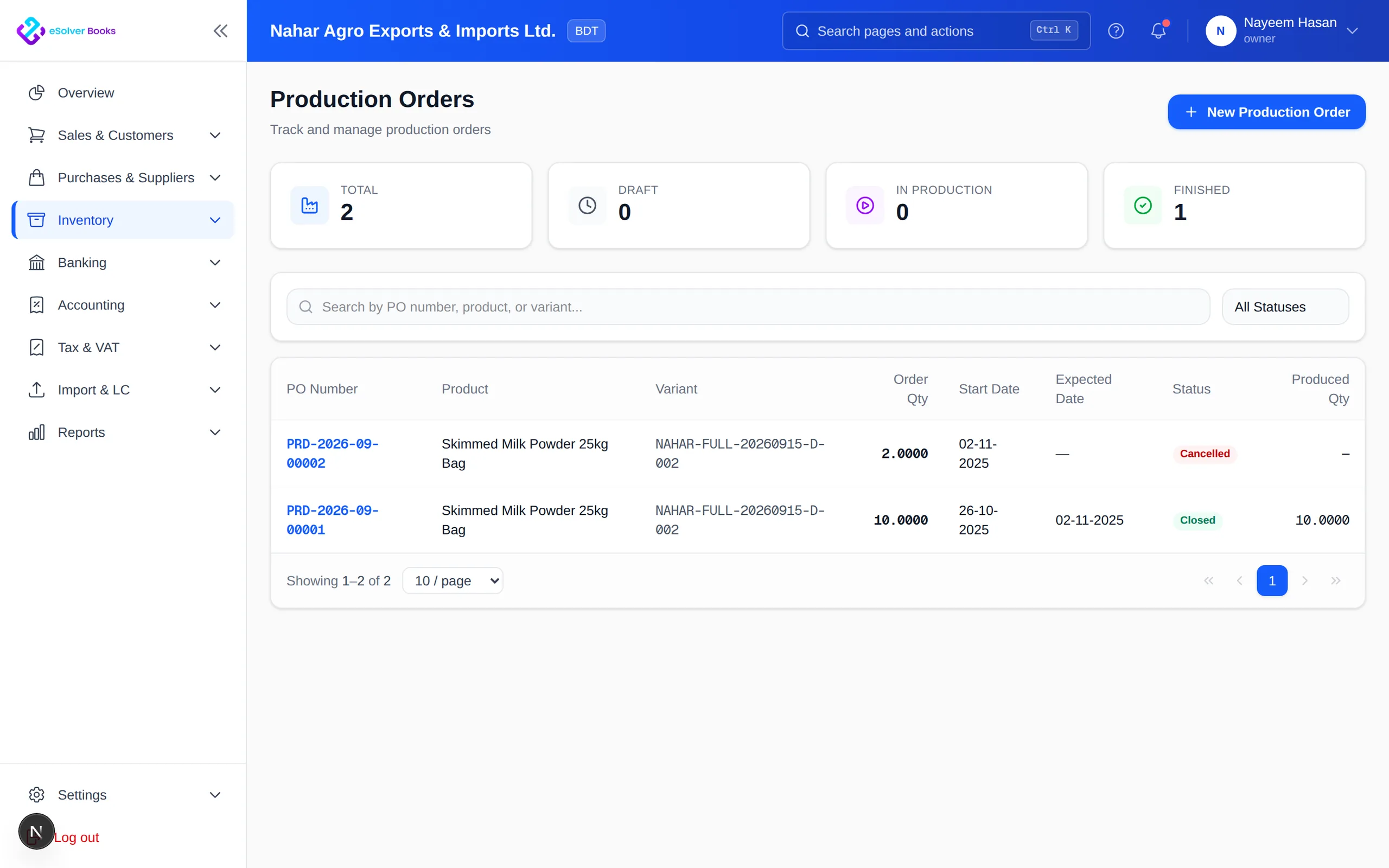
One connected workflow
A garments or manufacturing business carries a harder accounting problem than a trading one. Material arrives under an LC, often into a bonded warehouse; it is consumed against a bill of materials; output is produced in batches; and the cost of a finished garment depends on decisions made across purchasing, production and logistics. eSolverBooks keeps those records connected so cost per unit is measured rather than estimated.
Core capabilities
Define multi-level BOMs with component quantities, wastage allowance and the finished output each one produces.
Plan a run, check component availability, issue materials from the right store and receive finished goods at built-up cost.
Track duty-suspended material separately from duty-paid stock, with receipts and consumption recorded against the entitlement.
Raw material arriving under a letter of credit carries its landed cost into production rather than being valued at invoice.
Compare planned against actual material usage per run, so overconsumption is visible while it can still be acted on.
Build cost per unit from material, conversion and allocated overhead, then compare it with realised selling price.
How it works
Create the BOM with components, quantities and expected wastage, and define the finished item it produces.
Raise purchase orders or open the import LC, receive against the order, and place stock in the correct warehouse or bonded area.
Issue components against the production order, record output as it completes, and move finished goods into stock at cost.
Check consumption variance, confirm bonded consumption against the entitlement, and read the period's cost of production.
Business outcomes
Cost per unit built from real consumption
Bonded and duty-paid stock kept properly apart
Imported material valued at landed cost
Variance visible per run rather than per quarter
Get started
Discuss your current process, data, team, and reporting requirements with eSolverBooks.